The AIDS Quilt—Photo courtesy The Names Project
What did it mean then, and what does it mean now?
Thirty years have passed since San Francisco gay rights activist Cleve Jones decided to honor his friend, Marvin Feldman, who died from AIDS complications. Jones did so by creating a fabric panel with his friend’s name — written in white over a gray background covered in pink triangles. “It was part of a healing process,” Jones said at the time. “Afterward, I had a real sense of resolution and completion.”
However, the true work had just begun. Within months, Jones and his friends received two thousand more panels and began sewing together a memorial. Known as the AIDS Memorial Quilt, it has grown to include more than 48,000 panels and 96,000 names.
“It is the most democratic memorial of our time,” says Julie Rhoad, President and CEO of The NAMES Project Foundation (aidsquilt.org), which manages the Quilt. “It is created by the people for the people they love; it is a reflection of so much that is good in humanity. And I think it continues to be so.”
The Quilt was first hung from the San Francisco mayor’s balcony in June 1987 and then displayed on the National Mall in Washington, DC, that October. “It was certainly a time of great sorrow, loss and anger,” says Rhoad. ”Going to DC was a wakeup call.”
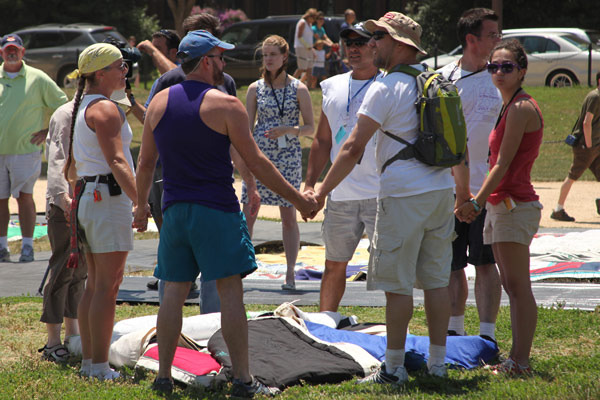
As the size of the Quilt has grown — it is now 1.3 million square feet, and would span 50 miles if all panels were laid end to end — so has the demand for it to be presented across the country. Each year, portions of the Quilt are displayed at schools and community centers, often coinciding with World AIDS Day. The Names Project annually welcomes 1,500 students to visit and understand its history. This year, the 30th anniversary of the Quilt will be marked with special displays to remind the public both of lives lost and those who continue to struggle today.
The Quilt is now a piece of history that chronicles pain while demonstrating progress, and in so doing elicits sadness as well as hope. “It is both epic and intimate at the same time,” Rhoad says. “When our founders conceived of the Quilt, they never imagined that what started with a single panel would end up being 54 tons of material [with] so many different roles … locally, nationally and internationally. This particular piece of fabric has endured, has shifted and changed in its role and has maintained its place in society as a vital expression of people.”
New Orleans, LA This Labor Day weekend extravaganza is a cornerstone of queer culture in…
As a writer, I’ve admired David Sedaris from afar ever since hearing a live reading…
Critically acclaimed, Nashville-based LGBTQ+ indie-rock artist and advocate Abby Nissenbaum and her video "Gentleman," the highlight track from her new EP Want…
Finding Fire Island, the GLAAD-nominated documentary series created, executive produced, and narrated by Jess Rothschild,…
“These are stories that confirm humans are good people,” says Feng-Feng Yeh of Chinese Chorizo…
No matter how strong, smart, or successful we become, there’s always that quirky, queer kid…
Leave a Comment